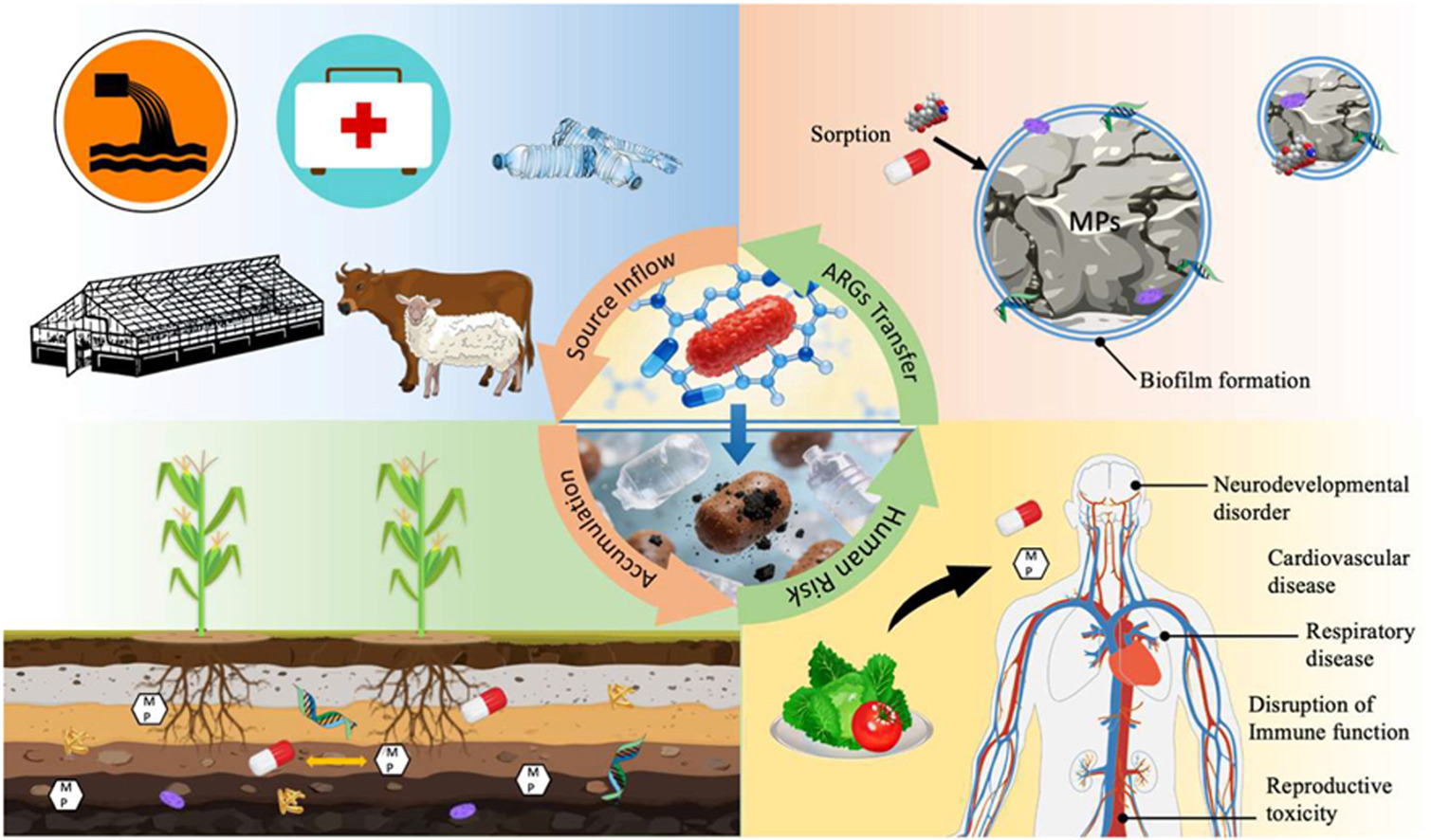
Combined pollution of microplastics and antibiotics in agricultural ecosystems: occurrence, mechanisms, and risks
, ,
a Institute of Biotechnology, Ministry of Agriculture Key Lab of Molecular Biology of Crop Pathogens and Insects, Zhejiang Key Laboratory of Biology and Ecological Regulation of Crop Pathogens and Insects, Zhejiang University, Hangzhou, China
b School of Civil and Environmental Engineering, Georgia Institute of Technology, Atlanta, 30332, Georgia United States
c Zhejiang Agricultural Technology Extension Center, Hangzhou Zhejiang, 310000, China
Abstract
Antibiotics and microplastics are two classes of emerging contaminants of significant concern in agricultural ecosystems. This review examines their interactions, combined environmental behavior, ecological effects, and potential risks as co-occurring pollutants in farmland environments. Due to their small size and rough surface, microplastics can act as carriers for antibiotics through adsorption, altering antibiotics’ mobility and bioavailability. This combination not only delay the degradation of antibiotics, prolonging their environmental persistence, but also lead to synergistic toxic effects within organisms upon ingestion. This article systematically analyzes the transport and transformation processes of "antibiotic-microplastic" composite pollutants within the agroecosystem, elucidating their combined action mechanisms via pathways such as physical carriage, chemical interactions, and disturbance of microbial communities. Furthermore, this review assesses the potential risks posed by this synergistic pollution to soil health, crop safety, and human health. Finally, the current research gaps are summarized, and future key research directions are proposed, aiming to provide a scientific basis for the precise prevention, control, and risk management of composite pollution in agricultural environments.



 Address: No. 31 Fukang Road, Nankai District,Tianjin, 300191, P.R. China
 Website: https://aepi.caas.cn/en/
 Email: hbskjc@163.com