Socioeconomic factors influence human exposure to antibiotic resistance genes in rural surface waters of the Yangtze River basin
, ,
Agro-Environmental Protection Institute, Ministry of Agriculture and Rural Affairs, Tianjin, 300191, China
Abstract
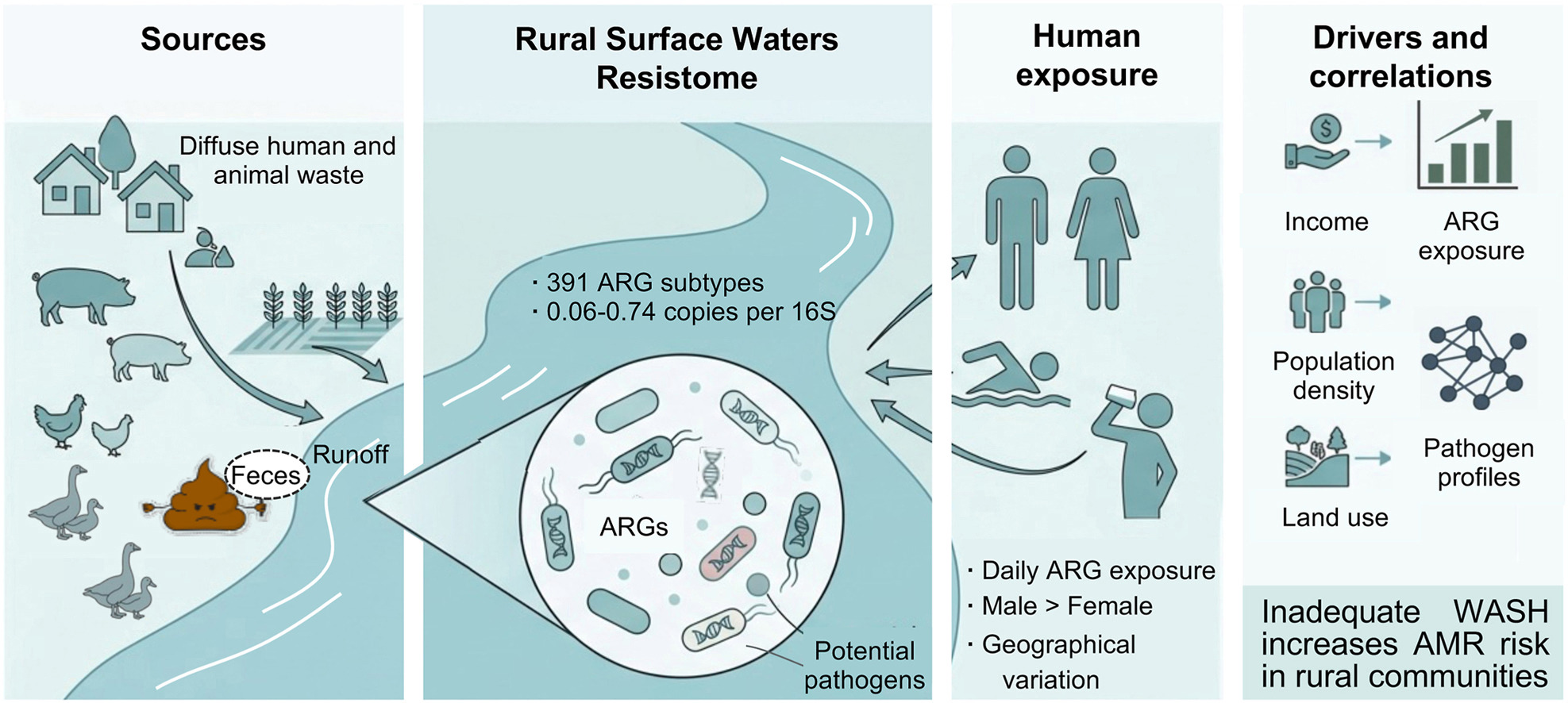
Antibiotic resistance genes (ARGs) extensively propagate and disseminate in rural settlements, posing a risk to local community. However, the exposure of rural residents to environmental resistome and its association with natural and socio-economic factors remains poorly understood. Herein, surface water samples were collected from residential areas of rural community from nine provinces of the Yangtze River basin, China. A total of 391 ARG subtypes were detected, with total ARG abundance ranging from 0.06 to 0.74 copies/16S copy. Rural surface water resistomes were partially contributed by human and animal fecal pollution, as revealed by fecal indicator bacteria combined with a microbial source tracking method (FEAST). Metagenomic assembly demonstrated that some ARGs co-occurred with and were harbored by pathogenic bacteria, indicating the potential risk of resident exposure to antibiotic-resistant pathogens. Notably, we estimated daily ARG exposure abundance under two scenarios. The results showed that ARG exposure was generally higher for males than for females and varied geographically. Mantel test indicated that ARG exposure was correlated with per capita disposable income of rural residents, while pathogen profiles were correlated with rural population and village construction land area. Overall, this study highlights the urgent need for greater attention to ARG dissemination in rural areas with inadequate water, sanitation, and hygiene, which can inform location-specific policy decisions to protect rural residents from antimicrobial resistance.



 Address: No. 31 Fukang Road, Nankai District,Tianjin, 300191, P.R. China
 Website: https://aepi.caas.cn/en/
 Email: hbskjc@163.com